
Contract — Pages 3–4: Due Diligence & Repair Request
📖 2 min read
📄
Residential Purchase Agreement (RPA)
Open the contract as you work through this lesson — every Line reference below maps to the PDF.
Section 4 of the Buyer Contract Training course. This lesson walks through pages 3–4 — due diligence & repair request. Open the RPA PDF below and follow every line reference as you read.

Due Diligence Period
- Line 30: make sure checked. Line 28: suggested 10 days; 15 days for Multi-Family.
- If utilities are not on, get an extension from the date utilities are turned on.
- Place expiration date in Google Calendar 2 days prior AND day of — reminders for you and your client.
Extending or Cancelling
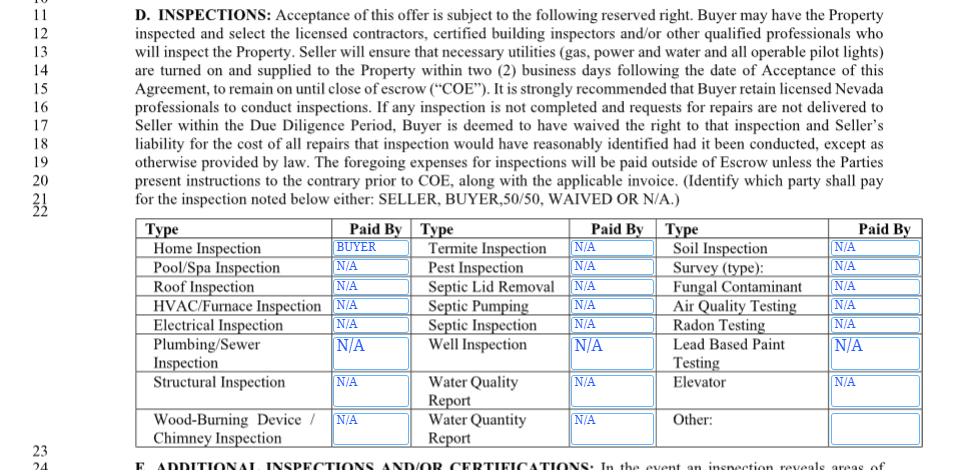
- Buyer must extend if there is an issue, waive, or cancel by Due Diligence expiration. (Line 8 Page 4)
Inspections
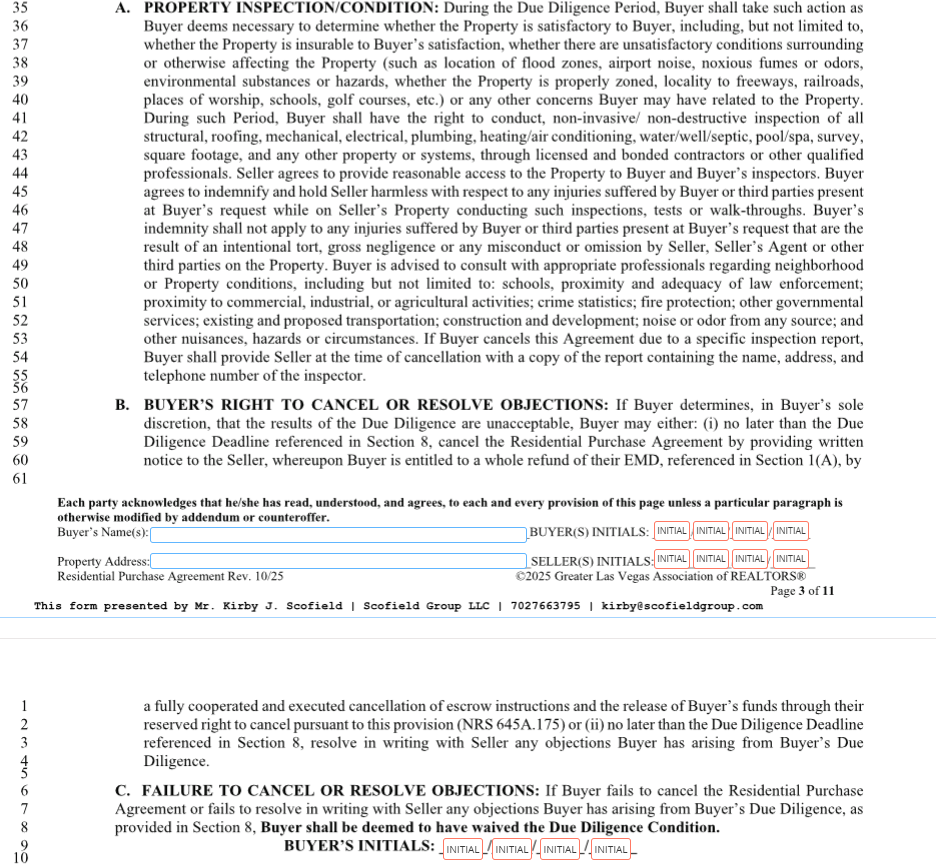
- The NON WAIVED / NA items are the main inspections you will use; all others based on the property.
- This is who, per contract, PAYS for them — but Buyer can get any and all inspections they wish during the Due Diligence period.
- This is a big one to coach your client on — Lines 31–38.

Repair Request
- Only request items that materially affect value or the ability to get a loan: HVAC, Plumbing, Code Violations, Roof, Electrical. Everything else is from viewing and AS-IS. (Lines 31–38)
- They can always ask for more, but if you coach them on this, your offer, transaction, and experience will be better.
- Must be before the end of Due Diligence — otherwise waive or cancel if no agreement.
- Google Calendar reminders 2 days prior AND day of.
🎯 Why this matters
Due Diligence is about timing + coaching. Set the date, calendar it twice (2 days out + day of), and coach the client to ask only for what materially affects value or financing.
💼 Coaching Tips — Educating Buyers on the Market
Review Current Market Data
Walk every buyer through:
- Inventory levels
- Months of supply
- New listings
- Closed sales
- Average sales price
- Price trends
Help Buyers Understand Supply & Demand
- High supply + low demand = downward pressure on prices
- Low supply + high demand = upward pressure on prices
Coach Realistically
- Set expectations
- Educate buyers
- Prevent emotional decisions
- Help buyers compete strategically