
Confirmation of Representation, FIRPTA & Acceptance
Contract — Pages 10-11: Confirmation of Agency, Buyer Disclosure & FIRPTA
Agency confirmation, expiration rules, FIRPTA basics, Day 1 of escrow.

LINES 6-10 Complete fully. Line 9 is YOUR phone number. Line 10 is YOUR email.
LINES 12-17 — Interest Disclosure If you have an interest in the property (family member, ownership stake, etc.), disclose it here.
Agency confirmation lines tell the seller WHO they’re dealing with and HOW to reach you. Incomplete lines get the offer bounced back for completion before anyone even reads the terms.
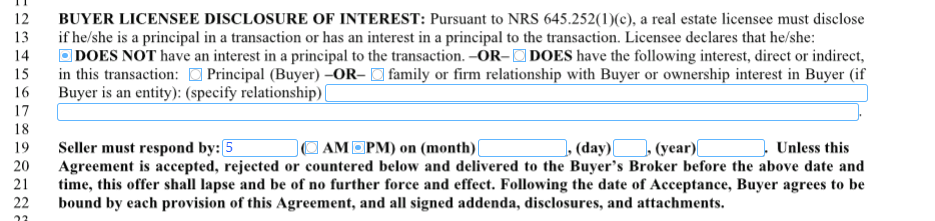
Once expired: Buyer is off the hook and doesn’t need rejection. If the seller signs after expiration, it’s up to the buyer to proceed (or not).
Without an expiration, the offer is open-ended — the seller can let it sit and shop around. A 3-5 day window forces a decision.
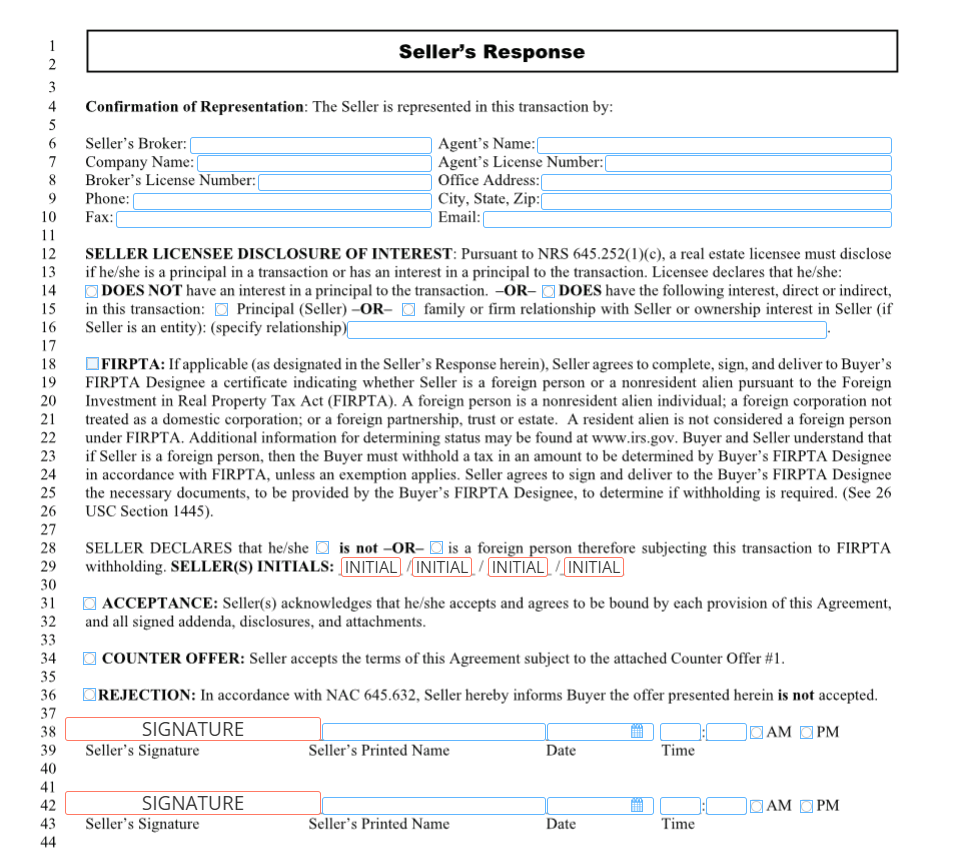
LINE 18 — FIRPTA If disclosed, advise buyer of FIRPTA rules. Title will withhold a % of seller proceeds and pay IRS. The Buyer files a form with their taxes that year but is NOT liable for the money — it’s a simple disclosure on behalf of the FIRPTA seller.
LINE 31 — Accepted AWESOME — you’re accepted and opening escrow.
LINE 34 — Counter Review counter with buyer. Accept, Reject, or Counter Back.
LINE 36 — Rejected Move on or re-offer.
FIRPTA only triggers when the seller is a foreign person. The buyer files a form on the seller’s behalf but isn’t liable for the money — brief your buyer so the disclosure doesn’t spook them. And Day 1 of escrow is fully-executed acceptance, not EMD delivery — track contingency dates from the right start or you’ll miss the actual deadlines.
Buyer Representation & Showing Tips
The contract is only half the job. The other half is how you coach the buyer through the process — from first showing to keys in hand.
Coaching the Buyer While Touring
- Coach the client on the process AS you tour homes — don’t save it for after.
- Confirm financing is secure AND that the homes can do the loan type they’re using if financed.
- Coach them on viewing site unseen, and what to expect from inspections.
- Make sure they understand the Appraisal and Loan contingencies (covered in the contract sections above).
- Give them a breakdown of what to expect from the HOA/CIC Resale Package.
- Set the expectation: they are responsible that the Lender they choose performs.
Multiple Offers & Escalation Language
“The buyer is offering on multiple homes but will withdraw all outstanding offers once the contract is executed.”
“Buyer agrees to pay $X NET amount over any other proceeding offers to a max amount of $X; the proceeding offer must be presented to the buyer once the contract is executed.”
The Buyer Process — Step by Step
- POF / Pre-Approval / Start researching homes on the Site
- Showings / Offers / Counters
- Open Escrow — intro email should copy the co-op agent AND lender
- Within 48 hours, the buyer should have a complete file to Lender to order an appraisal
- Inspection — get it done early to allow time for Request for Repairs
- Appraisal — be prepared for the outcome and the options at that point
- Loan Contingency — stay in contact daily with the lender until CD is sent and we have CTC
- Signing / Funding / Recording
- Keys and Possession
Condo Certs
Approval is based on three factors:
- Total % down
- Owner occupancy % in the HOA
- Active litigation against the HOA
Broom-Swept & Possession
Unless otherwise specified in writing, the buyer receives the home free of personal belongings and in broom-swept condition.
Taking possession can happen at:
- COE (default)
- Owner leaseback (negotiated, in writing)
- Tenant occupancy (transfers with all leases & management contracts — per Pages 5-6 lesson)
You’re NOT the Expert
Your job is to coordinate the experts and protect the buyer’s interest. When the buyer asks a question outside your lane, route them to the right professional — don’t guess. Guessing is how E&O claims get filed.
The 5-Part Buyer Consultation
SG’s framework for converting a buyer lead into an exclusive client.
- Appropriate Preparation — office, welcome sign, MMFI
- The Buyer Questionnaire — deep discovery before showing anything
- Explain the Buying Process — set expectations end-to-end
- Educate on the Market — data, not opinion
- Gain Exclusivity — close them on hiring you, on the spot
Step 1 — Appropriate Preparation
- Whenever possible, hold the appointment at the office.
- MMFI = Make Me Feel Important. Receptionist greets them by name. “Welcome [Name]” sign at the entrance. Tour the office and introduce the team that will be working with them.
- Have your resources ready: most recent market data, homes meeting their criteria, lender on standby.
- Remove all distractions from the environment.
Step 2 — The Buyer Questionnaire
Ask these in order. Listen more than you talk.
- “Let’s review what we discussed over the phone. Tell me a little more about your plans to buy a home.”
- “When did you start your home search?”
- “What’s the primary reason you’re looking to purchase?”
- “What’s your timing? When would you like to be in your new home?”
- “What websites or online search tools have you been using so far?”
- “Have you seen anything you really liked? What did you like about them?”
- “Have you written any offers yet?”
- “Have you identified any specific areas you’re interested in?”
- “What’s important to you in the community you choose?”
- “Let’s talk about your ideal home — bedrooms, bathrooms, special features?”
- “If you had to reduce it to 5 things you MUST have, what would they be? Which are most important?”
- “What do we have to avoid in the home you choose?”
- “What price range do you want to stay in?”
- “Have you met with a lender and gotten qualified?”
- “How much money will you be putting down?”
- “Is there anyone else involved in the home buying process?”
- “What’s important for you in the agent you choose to represent you?”
- “What’s really important for you in buying a new home? How is that important to you? Ultimately, what will all of that do for you?”
- “If buying a home doesn’t work out, what other options are there?”
- “What questions do you have for me?”
Step 3 — The Home Buying Process
Start by asking what they already know. Then walk them through the 7 steps:
- Choose the right agent to represent you in the purchase.
- Meet with a lender, get approved, find your price range, and put together your financial plan.
- Begin searching online, visiting open houses, and actively viewing properties.
- I will be looking for properties that are not yet on the market or that may be coming soon.
- Find your perfect home, write up an offer, and begin negotiations.
- Complete inspections, due diligence, meet all timelines, and successfully close.
- My favorite part — I get to give you your keys and you get to move in.
Step 4 — Understanding the Current Market
Lead with discovery: “What have you heard is occurring in the last 90 days with the real estate market here? Where did you get that information?”
Then share the REALITY using current data:
- Inventory levels
- Months’ supply
- New listings (last 30 days)
- Sales (last 30 days)
- Average sales price
- Projection of price increase
The Millennial Driver: 78 million Millennials = 31% of the population (Boomers were 27% at peak). 70%+ desire to buy a home in the next 3 years. 45% of all mortgage applications are with Millennials.
The Supply & Demand Lock: “If supply is high and demand is low, what happens to prices? What if demand is high and supply is low? So based on the data, what market are we in?”
Step 5 — Gain Exclusivity
After taking time to understand their goals, the process, and the market — share exactly what you do that’s above and beyond:
- Previewing homes daily so you’re informed first when one becomes available.
- Contacting other agents and team members for their coming-soon listings.
- Actively door-knocking in communities they want to live in.
- Researching bank-owned and recently defaulted homes.
- Calling expired and canceled listings that match their criteria.
- Coordinating with all affiliates (title, escrow, lender, inspector) for an easy close.
- Staying in regular communication throughout the process.
- Being strong in all negotiations — “You DO want an aggressive agent, don’t you?”
“[Name], do you want me to help you find your next home?”